
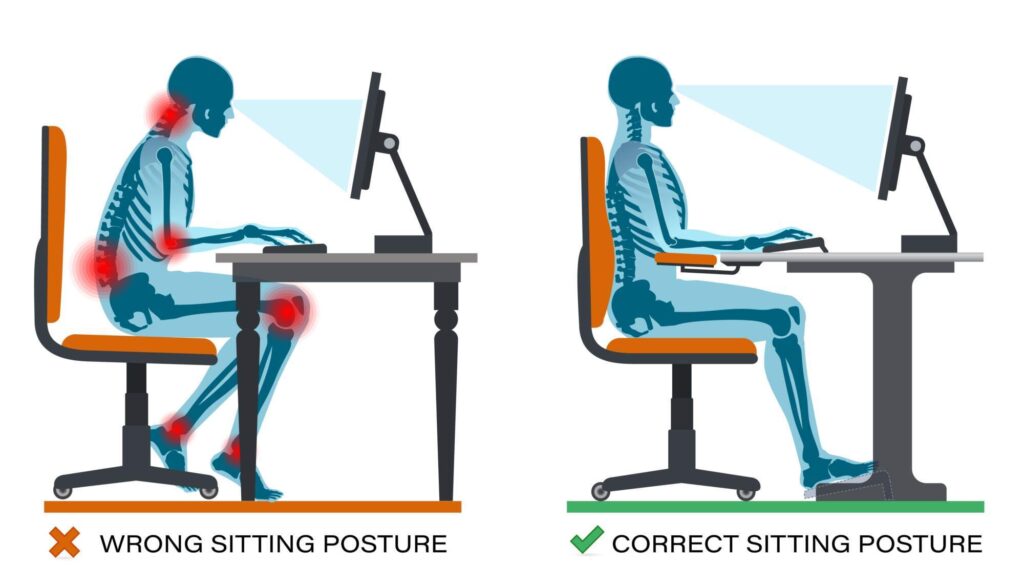
How Your Posture Affects Your Mental State
You’ve probably heard the advice to “sit up straight” more times than you can count. But what if that nagging reminder isn’t just about looking confident—what if your posture is actually shaping your emotional and mental health? The relationship between how you hold your body and how you feel is far more powerful than most people realize, especially for those of us spending eight hours a day hunched over a keyboard.
When you spend hours in a rounded, forward-leaning position, you’re not just creating physical strain on your spine and shoulders. You’re sending signals to your nervous system that trigger stress responses. Your body interprets slouched posture as a defensive or anxious position, and your brain responds accordingly, amplifying feelings of worry, tension, and overwhelm.
The Mind-Body Loop: Posture and Your Nervous System
Our bodies and minds are deeply connected through the nervous system. When you slouch—shoulders rounded forward, head jutting ahead of your spine—you’re restricting your breathing, compressing your chest, and putting pressure on nerves that control emotional regulation. This restricted posture literally limits your oxygen intake and signals to your autonomic nervous system that you’re in a stressed or threatened state.
Conversely, when you stand or sit upright with your shoulders back and your spine aligned, you open your chest cavity, improve oxygen flow, and activate your parasympathetic nervous system—the part responsible for calm and relaxation. This is why people often feel more confident, focused, and emotionally stable when they maintain good posture. It’s not just psychology; it’s neurobiology.
Desk Work and the Anxiety Spiral
For desk workers and professionals, the challenge is particularly acute. Staring at screens, typing, and hunching over documents creates a perfect storm of postural problems. Over time, this leads to what’s often called “upper crossed syndrome”—a pattern of muscle tightness and weakness that locks the shoulders forward and the head into an unhealthy position. Once this pattern develops, your body stays in a low-level stress state, even when you’re not actively stressed. This can fuel chronic anxiety, difficulty concentrating, and a persistent sense of tension that no amount of deep breathing alone can fully resolve.
Chiropractic Care Breaks the Cycle
Addressing postural misalignment through chiropractic care offers a direct path to nervous system regulation. When Dr. Mary corrects spinal subluxations—misalignments that restrict nerve function—they’re not just relieving physical pain. They’re removing interference to your nervous system’s ability to balance stress responses and promote calm.
Chiropractic adjustments restore proper alignment, reduce nerve compression, and help break the habit of slouching by addressing the underlying structural issues. Combined with posture correction exercises and ergonomic adjustments to your workspace, regular chiropractic care can help reset your nervous system’s baseline, making it easier to feel centered and less reactive to daily stressors.
Red light therapy, offered alongside chiropractic adjustments at many clinics, further supports nervous system healing by reducing inflammation and promoting cellular recovery in stressed muscles and connective tissues. Many patients report feeling noticeably calmer and more mentally clear after treatment.
Practical Steps You Can Take Today
While Dr. Mary addresses the structural foundation, you can start supporting your posture and mental health immediately. Set hourly reminders to check your shoulder and head position. Keep your monitor at eye level. Take regular breaks to stand and stretch. Practice the “wall angel” exercise—stand with your back against a wall and gently move your arms up and down to reset shoulder alignment.
These small shifts won’t fix deep postural patterns on their own, but they create awareness and reinforce better habits. When combined with professional chiropractic care, they accelerate your progress toward lasting alignment and emotional resilience.
If you’re a desk worker struggling with anxiety, persistent tension, or that nagging sense that something’s “off,” your posture may be playing a bigger role than you realize. The good news: addressing it often brings surprising relief—not just physically, but emotionally and mentally too. Dr. Mary can assess your spinal alignment, create a personalized plan, and help you reconnect your body and mind for better overall wellness.
Call (775) 762-3184 or visit our contact page.